Specialist Doctors in India: Which Doctor Should You Consult?

Healthcare in India has evolved significantly over the last few decades. Earlier, especially in villages and small towns, many people depended on RMPs and local medical practitioners for primary healthcare. They helped manage common illnesses such as fever, cough, cold, stomach infections, and minor injuries, making basic healthcare more accessible in rural communities.
As medical science advanced, MBBS-qualified doctors became the foundation of modern healthcare. They diagnose and treat a wide range of common conditions, guide patients on preventive care, and refer them to specialist doctors when advanced expertise is required.
Today, healthcare is highly specialized. Different organs, diseases, and treatment areas often have dedicated specialists who undergo additional training after MBBS. Choosing the right specialist can lead to faster diagnosis, better treatment, and improved health outcomes.
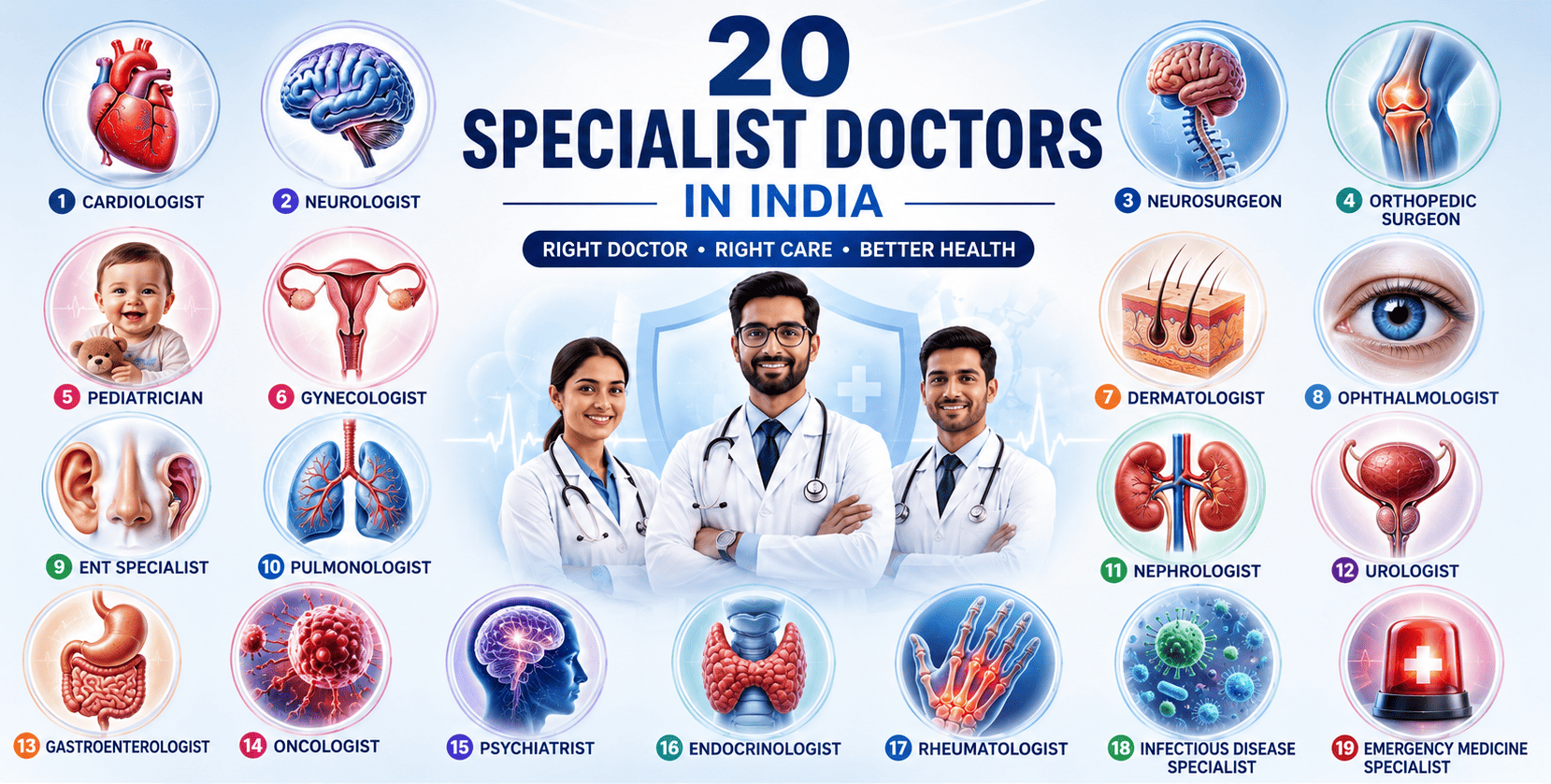
This guide explains 20 major types of specialist doctors in India, their common qualifications, and the health conditions they usually treat.
Types of Specialist Doctors in India
This guide explains 20 major types of specialist doctors, their qualifications, and the diseases they treat.
1. General Physician / Internal Medicine Specialist (MBBS, MD/DNB General Medicine)
Treats:
• Fever and infections
• Diabetes
• High blood pressure
• Thyroid disorders
• Viral illnesses
• Lifestyle diseases
A General Physician is usually the first doctor to consult for most non-emergency health concerns. They can treat common conditions and guide you to the right specialist if needed.
2. Cardiologist / Heart Specialist (DM/DrNB Cardiology)
Treats:
• Heart attack
• Chest pain
• High blood pressure
• Heart failure
• Irregular heartbeat
• Coronary artery disease
3. Neurologist / Brain and Nervous System Specialist (DM/DrNB Neurology)
Treats:
• Stroke
• Epilepsy
• Migraine
• Parkinson’s disease
• Neuropathy
• Multiple sclerosis
4. Neurosurgeon (MCh/DrNB Neurosurgery)
Treats:
• Brain tumors
• Spine disorders
• Head injuries
• Brain hemorrhage
• Nerve compression requiring surgery
5. Orthopedic Surgeon (MS/DNB Orthopedics)
Treats:
• Bone fractures
• Joint pain
• Arthritis
• Sports injuries
• Knee replacement
• Hip replacement
6. Pediatrician / Child Specialist (MD/DNB Pediatrics)
Treats:
• Newborn care
• Childhood infections
• Vaccination
• Growth and development concerns
• Nutritional disorders
7. Gynecologist and Obstetrician (MD/MS/DNB Obstetrics and Gynecology)
Treats:
• Pregnancy care
• Childbirth
• Infertility
• Menstrual disorders
• PCOS
• Women’s reproductive health
8. Dermatologist / Skin Specialist (MD/DNB Dermatology)
Treats:
• Acne
• Skin allergies
• Eczema
• Psoriasis
• Hair loss
• Nail disorders
9. Ophthalmologist / Eye Specialist (MS/DNB Ophthalmology)
Treats:
• Cataract
• Glaucoma
• Retinal diseases
• Eye infections
• Vision problems
10. ENT Specialist / Ear, Nose and Throat Specialist (MS/DNB ENT)
Treats:
• Ear infections
• Hearing loss
• Sinusitis
• Tonsillitis
• Voice disorders
• Nose disorders
11. Pulmonologist / Lung Specialist (MD/DNB Respiratory Medicine, DM/DrNBPulmonary Medicine, or equivalent advanced training)
Treats:
• Asthma
• Tuberculosis (TB)
• COPD
• Pneumonia
• Lung infections
• Sleep apnea
12. Nephrologist / Kidney Specialist (DM/DrNB Nephrology)
Treats:
• Kidney failure
• Chronic kidney disease
• Dialysis management
• Electrolyte disorders
• High blood pressure related to kidney disease
13. Urologist (MCh/DrNB Urology)
Treats:
• Kidney stones
• Enlarged prostate
• Urinary tract disorders
• Male urinary problems
• Bladder diseases
14. Gastroenterologist / Digestive System Specialist (DM/DrNB Gastroenterology)
Treats:
• Acid reflux
• Gastric ulcers
• Fatty liver
• Hepatitis
• Digestive disorders
• Colon diseases
15. Oncologist / Cancer Specialist (DM/DrNB Medical Oncology, MCh/DrNBSurgical Oncology, or MD Radiation Oncology)
Treats:
• Breast cancer
• Lung cancer
• Blood cancer
• Colon cancer
• Other major types of cancer
16. Psychiatrist / Mental Health Specialist (MD/DNB Psychiatry)
Treats:
• Depression
• Anxiety disorders
• Bipolar disorder
• Schizophrenia
• Sleep disorders
• Stress-related conditions
17. Endocrinologist / Hormone Specialist (DM/DrNB Endocrinology)
Treats:
• Diabetes
• Thyroid disorders
• Hormonal imbalance
• Osteoporosis
• Pituitary disorders
18. Rheumatologist / Joint and Autoimmune Disease Specialist (DM/DrNBRheumatology or equivalent advanced training)
Treats:
• Rheumatoid arthritis
• Lupus
• Gout
• Autoimmune diseases
• Joint inflammation
19. Infectious Disease Specialist (MD/DNB General Medicine with fellowship, DM/DrNB Infectious Diseases, or equivalent advanced training)
Treats:
• Dengue
• Malaria
• HIV/AIDS
• Typhoid
• COVID-19
• Complex bacterial, viral, fungal, and parasitic infections
20. Emergency Medicine Specialist (MD/DNB Emergency Medicine)
Treats:
• Heart attack
• Stroke
• Road traffic accidents
• Poisoning
• Severe trauma
• Other medical emergencies
When Should You Visit a Specialist?
- Visit a General Physician first for most health concerns.
- If your symptoms persist or become more complex, consult the appropriate specialist.
- Avoid self-diagnosing or choosing a specialist without medical advice whenever possible.
- Early consultation with the right specialist can prevent complications and improve recovery.
Why Choosing the Right Specialist Matters
Modern healthcare is becoming increasingly specialized. Every specialist undergoes years of advanced training in a specific field of medicine. Consulting the right doctor ensures:
- Accurate diagnosis
- Personalized treatment
- Better health outcomes
- Reduced unnecessary tests
- Faster recovery
Find the Right Specialist Doctor Easily
Finding the right specialist should not be difficult. A digital healthcare platform can help patients search for doctors by specialty, view qualifications, check clinic locations, consultation fees, available timings, and book appointments—all from one place. It also helps patients securely maintain their lifetime digital health records for better continuity of care.
Conclusion
From General Physicians to highly specialized doctors such as Cardiologists, Neurologists, Oncologists, and Endocrinologists, every medical specialist plays a vital role in delivering quality healthcare. Understanding which doctor treats which condition helps patients make informed decisions and receive timely, appropriate treatment.